They trusted us with the roof over their residents’ home.
2023 · Care facility roofing · Approximately 30,000 square feet · GAF Timberline HDZ in Pewter Gray · PVC gutter lining · Completed in roughly three weeks, including weather interruptions
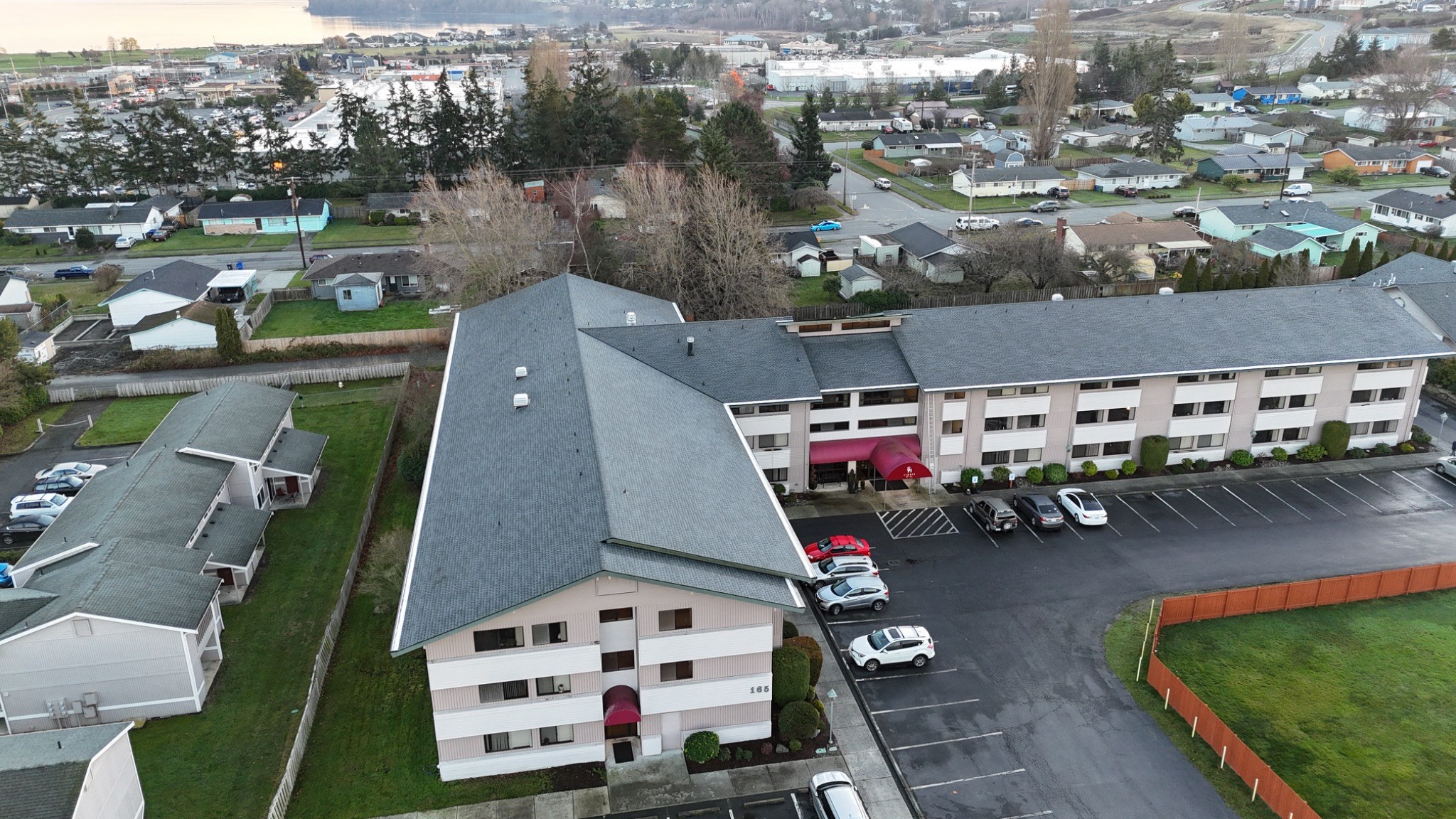
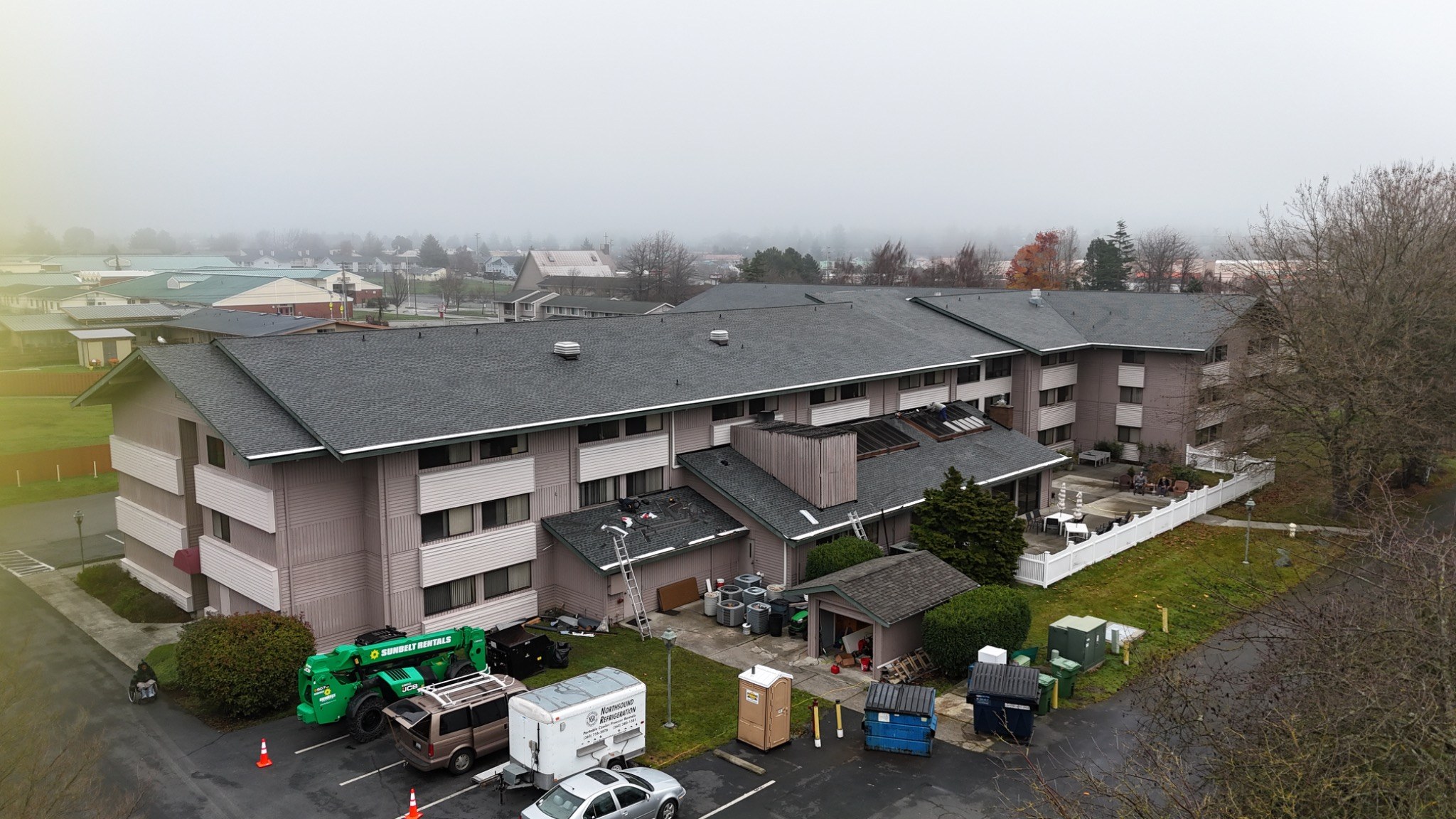
We started Summer Hill the day after Thanksgiving in 2023. Winter was settling into Oak Harbor, and beneath nearly 30,000 square feet of roofing, older residents were going about their lives.
This was their home. They needed care, the staff needed to keep working, and our crew had a substantial roof to replace above them. That responsibility shaped every part of our plan.
But when I think about Summer Hill today, the first thing that comes to mind is the people who trusted us with that responsibility—and how much those relationships have come to mean to me.
Trust began around a table
The first call came from the maintenance supervisor for a group of care facilities. We met, discussed the roof, and walked through how I would approach the project. After I prepared the estimate, I met with his wife, who oversaw the group’s facilities. They then invited me to sit down with the owner.
They wanted to know what materials I planned to use, why I recommended them, and whether we could deliver a project of this size. I understood their concerns. Hiring us meant trusting our judgment, our crew, and our ability to manage the work around the people who lived there.
Those early conversations gave us the chance to get to know one another. I could explain my thinking, listen to what mattered to them, and build a plan we felt confident moving forward with together.
A roof that had to suit its surroundings
Summer Hill is one of the tallest buildings I’ve worked on in Oak Harbor. Its height and coastal location leave the roof exposed to wind and salt air.
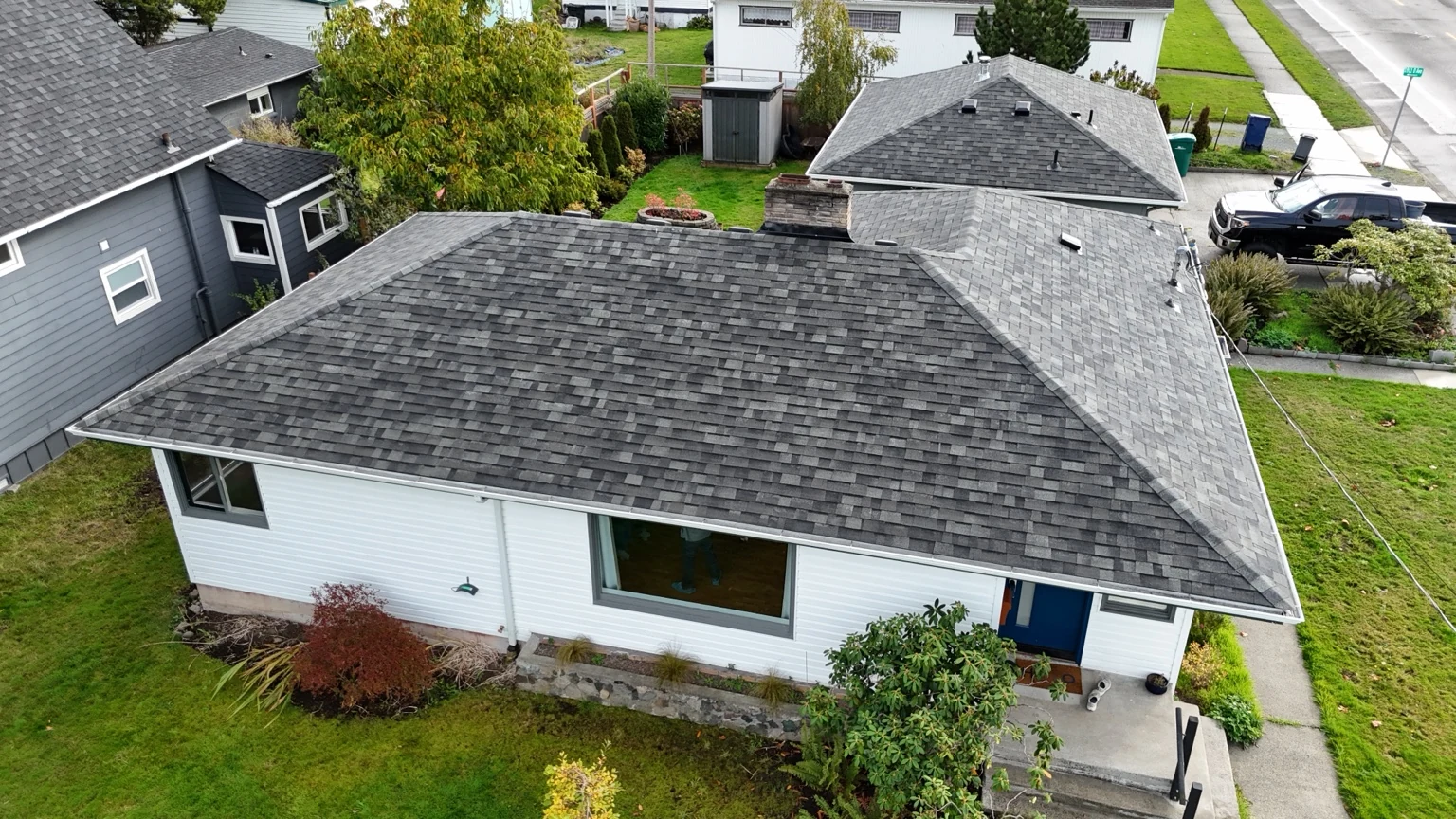
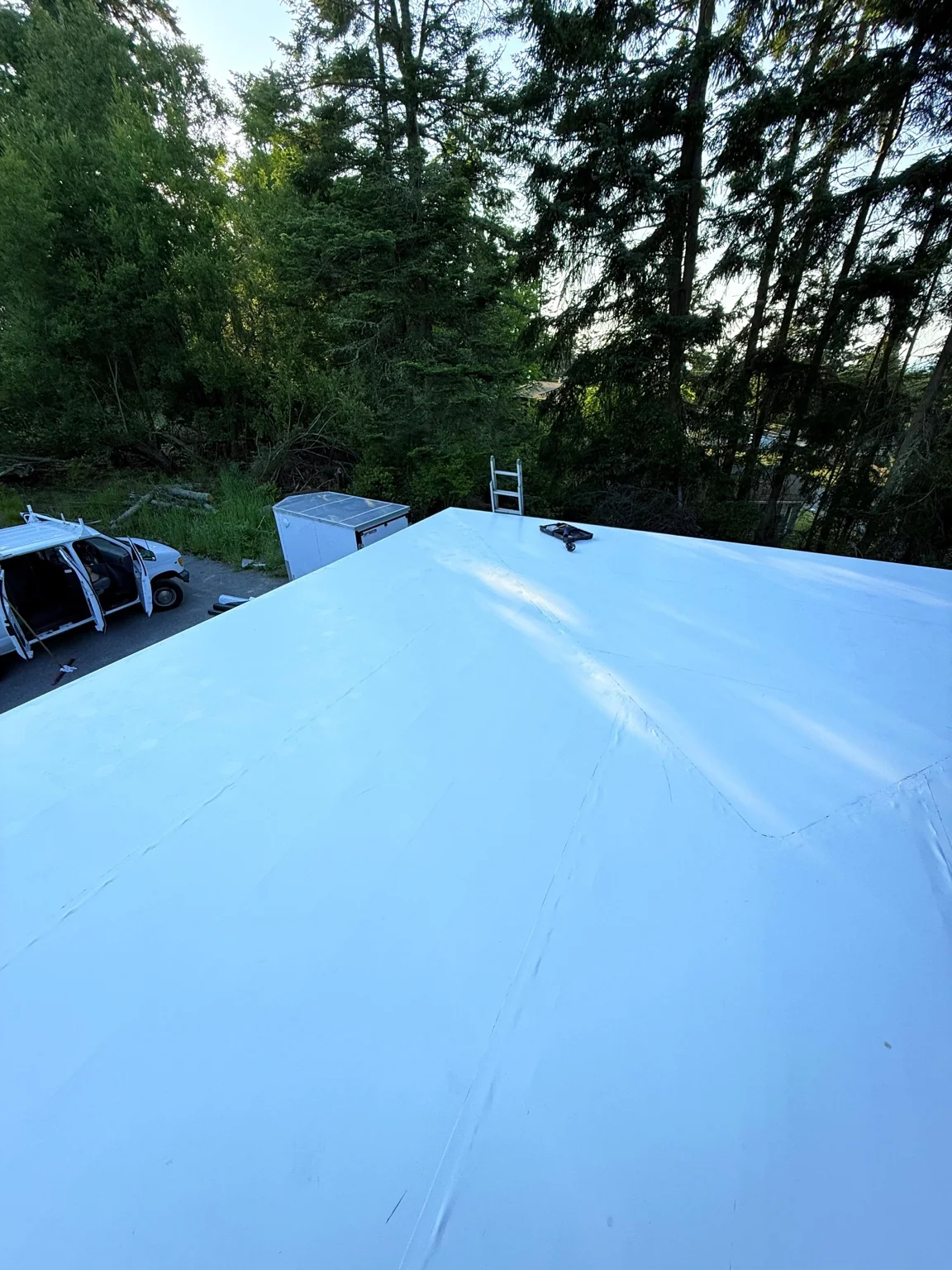
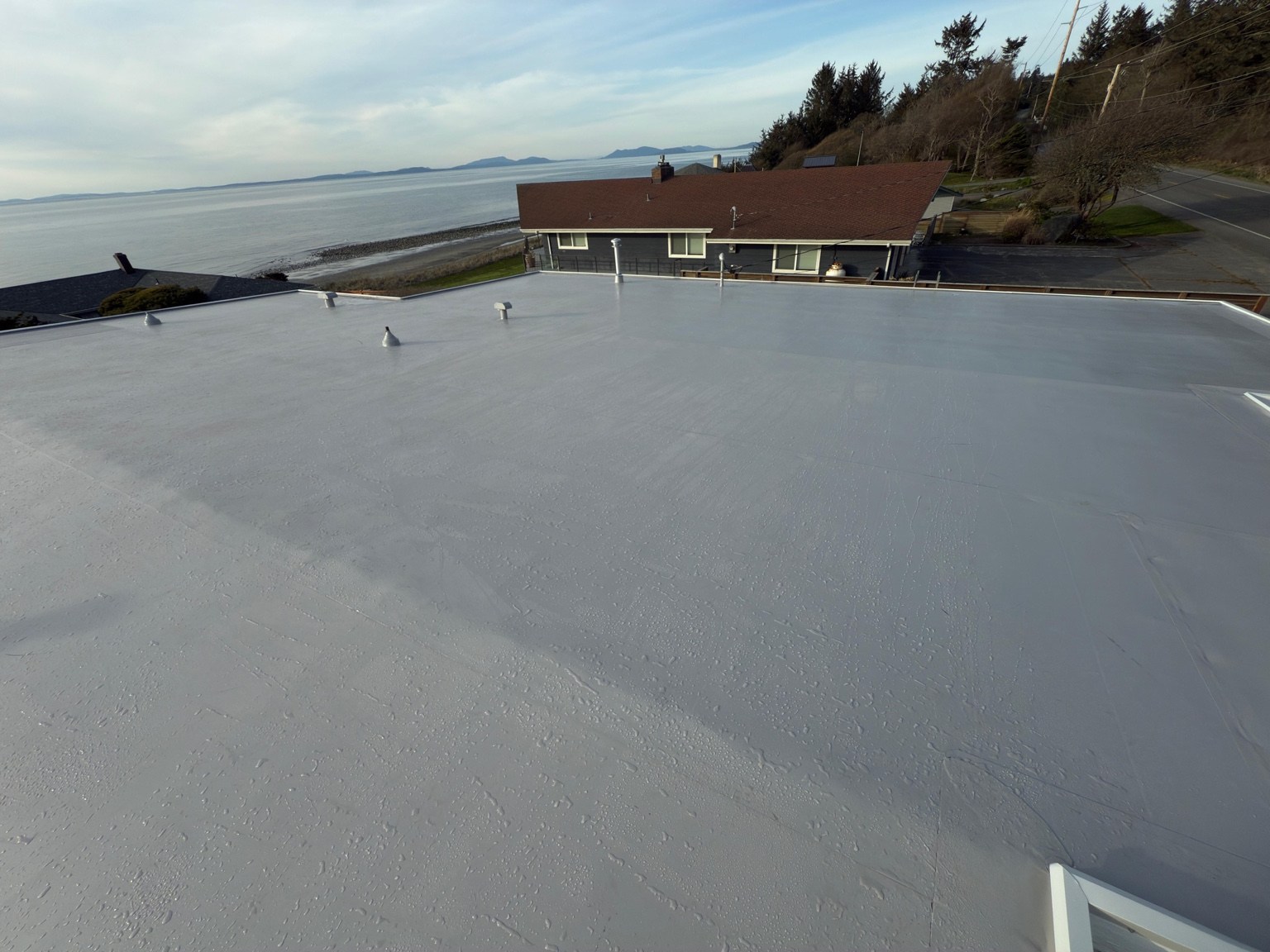
We discussed durability, wind performance, and warranty coverage. Together, we selected GAF Timberline HDZ shingles in Pewter Gray. At the eaves, we replaced the existing torch-down gutter lining with PVC, choosing heat-welded seams for those water-carrying areas.
I wanted management to understand the work beneath the finished appearance, because those details would be responsible for protecting the building long after our equipment was gone.
Caring for the property while people lived beneath us
Before starting, we arranged a portable restroom and marked work areas around the parking lot with cones and caution tape. We planned where equipment would sit, where materials would go, and how we would handle the old roofing.
For a project approaching 300 roofing squares, debris removal needed careful thought. We used a telehandler with 60 feet of reach and a bucket to receive tear-off material at roof level instead of dropping it to the ground.
The same care went into our daily cleanup and coordination. This was someone’s home throughout the installation. Our work needed to respect that.
Winter set the pace. We planned each day around it.
Starting after Thanksgiving meant short days and a forecast that demanded constant attention. Rain closed some work windows. Windstorms interrupted others. On certain clear mornings, frost covered the roof, and we waited for it to thaw before getting onto it.
Each day, we decided how much roofing we could responsibly remove and protect before leaving. Whatever we opened, we dried in that same day, putting protective roofing layers in place. That is our practice year-round in the Pacific Northwest.
When we uncovered plywood that needed replacement, we documented it promptly and sent it to management for approval. They could see what we were seeing and understand the decisions being made.
The work took roughly three weeks, including weather interruptions. There were days we could move forward and days we had to wait. Keeping the project organized meant communicating through both.
The part you cannot see from the street
You can see Summer Hill’s roof from many places around Oak Harbor. Every time I notice it, I feel proud that our crew did that work. What you cannot see is the relationship that grew while we were there.
As I got to know the owner and management team, our conversations reached beyond roofing. I learned about their backgrounds, where they came from, and how they got to where they were. We discovered shared beliefs. I came to admire the owner, and the management team became friends—people I think of as family.
For me, that connection was the most rewarding part of the project.
We went on to complete another substantial roof for the same group in Kent, on a taller building with more flat-roof area. We still work together regularly. When a new project comes up, they make sure we have a chance to bid.
I don’t take that opportunity for granted. It gives us another chance to earn their confidence. I’m grateful to say Wind Proof did the roof at Summer Hill. I’m even more grateful that, years later, we’re still part of the conversation.
That is what I want for the people who hire us: a roof they can depend on, and someone they still feel comfortable calling long after the job is done.
Explore commercial roofing ↗