Oak Harbor · Residential
Standing seam in Dark Bronze
Nu-Ray NRM-1000 · Dark Bronze
See the transformation from asphalt shingles to Dark Bronze standing seam metal.
View project & photos ↗
Built Strong.
Meant to Last.
Careful planning. Clear communication. Lasting protection.
Distinctive standing seam metal roofing, chosen for the way it looks—and the confidence you want to feel beneath it.
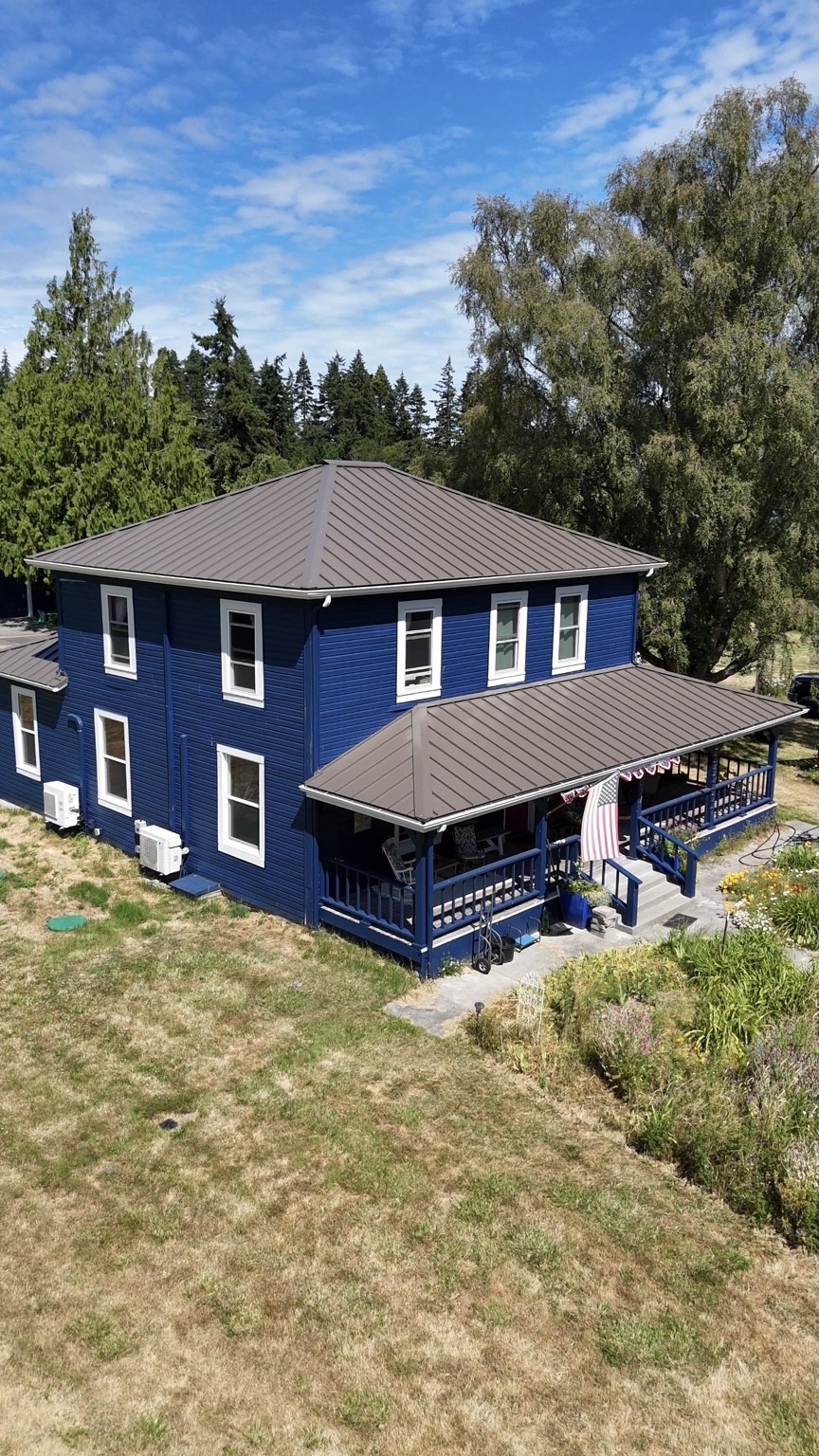
Explore life with a metal roof ↓Featured project: Oak Harbor, WA · Nu-Ray NRM-1000 · Dark Bronze.There is a reason a standing seam roof catches your eye. The clean lines. The defined roofline. The way the finish brings the whole home together.
But choosing metal goes deeper than appearance. You want durable materials, a roof suited to your surroundings, and the confidence that comes from making a considered investment in your home.
At Wind Proof, we understand both sides of that decision. We help you choose the look you want, then plan the complete system that gives that choice substance.
Explore the before-and-after photographs and project details.
Nu-Ray NRM-1000 · Dark Bronze
See the transformation from asphalt shingles to Dark Bronze standing seam metal.
View project & photos ↗Panel width, seam profile and color change how a home feels. We help you consider them together, so the roof complements the architecture and gives the exterior a deliberate, finished character.
Metal appeals to homeowners who want a durable roof and a long-term approach to ownership. The right material, finish and installation details matter to that investment—especially around salt air, exposed sites and Northwest weather.
You should know how your roof handles water, how the panels are attached, and who stands behind the installation. We explain those details clearly, so your confidence rests on more than the finished appearance.
A metal roof still needs inspection and care. We discuss drainage, debris, finish care and roof access before you choose, giving you a practical picture of what to expect after installation.
Compatible standing seam roofs can accept solar mounting clamps that grip the raised seams, without drilling attachment holes through the roof panels. It is a compelling reason to consider metal when solar is part of your plans.
Tell us early—even if solar comes later. Panel profile, layout, roof attachment and the future array need to be considered together. We can coordinate roof details with your solar installer so the mounting approach fits the selected system.
Non-penetrating solar attachment requires a verified compatible clamp and panel profile, plus project-specific load and attachment checks. Electrical routing and other equipment may still require separately detailed penetrations. Solar installation is a separate scope unless expressly included.
How seam-mounted attachment works ↗Standing seam is a complete roofing system. We understand how panel selection, fastening, thermal movement, water management and flashing depend on one another. That knowledge shapes the recommendation we make for your home.
It also shapes the questions we ask: How do you want the home to look? What concerns you about the existing roof? Is solar in your future? What matters most in the years ahead?
Our proposal connects those priorities to a defined scope. You can see the specified materials, the preparation, the installation details and the work included in the investment.
That is a Wind Proof principle on every roof. With metal, it carries through to the panel layout, the transitions and the details that give the finished roof its character.
See how we plan your system ↓A metal roof is shaped by the home beneath it. We work through the decisions that affect water management, installation and the finished appearance—then explain them in your proposal.
We assess the roof planes, valleys, walls, penetrations and drainage paths. Those conditions guide the panel system and the details needed where one surface meets another.
We define tear-off and disposal, assess the deck, and identify needed preparation. Underlayment is selected for compatibility with the metal system, including high-temperature requirements. Concealed damage is handled through the stated allowance or change process.
Your proposal identifies the selected panel and material specification. We review gauge, panel width, surface profile, color and coating together, with the property’s exposure and your priorities in mind.
Panels expand and contract with temperature changes. The attachment approach and fastening requirements are planned around the selected system, substrate and applicable project requirements.
We account for the trim and flashing your roof needs, including chimneys, skylights and pipe penetrations. The connection between components deserves the same attention as the panels themselves.
We address ventilation and drainage, define installation responsibilities, and plan cleanup and a final walkthrough. You can see what is included, what is optional, and what happens if conditions change.
Appearance matters. So do slope, seam design and installation requirements. We select the system after assessing your roof.
A standing seam option with a 1½-inch rib, concealed floating clips and standard 12- or 16-inch panel widths. Nu-Ray publishes a minimum roof pitch of 3:12.
We consider this profile for roof areas that meet its requirements, with panel layout and trim planned for the home.
Explore NRM-1000 ↗A standing seam option designed for lower-pitch roof applications. Lower slopes require particular attention to seam configuration, sealant, drainage and transitions.
We verify the current manufacturer requirements for the actual slope and roof assembly before specifying the system.
Review Nu-Ray roofing systems ↗Panel suitability depends on the complete assembly and current manufacturer instructions. A product’s minimum slope alone does not establish suitability for every roof. Manufacturer specifications and project-specific requirements govern installation.
Gauge, coating, color and panel profile belong in the same conversation. We explain the proposed combination and review physical samples so you can make an informed choice.
For island and waterfront properties, exposure matters. Material compatibility and manufacturer warranty restrictions need to be checked for the property.
We also discuss oil canning—the visible waviness that can occur in flat metal surfaces—and the appearance of available panel profiles before you order.
We explain the roof conditions behind the recommendation. You should understand the problem the proposed work is intended to solve.
Walk through the specified system, preparation, details, inclusions and options. Ask questions before choosing your direction.
Hidden conditions can become visible during removal. We explain the finding and any scope or price change before proceeding with additional work.
Considering metal for your Whidbey Island or Anacortes home? Start with the questions that shape the decision: investment, Northwest weather, everyday ownership and the system behind the appearance.
The price depends on the complete project: roof size and complexity, tear-off, decking repairs, panel gauge and finish, flashing, access and installation. A simple roof and a roof with multiple valleys, skylights and low-slope sections require different work. Wind Proof provides a written scope so you can see what the investment includes, rather than relying on a price for panels alone.
Metal can be a worthwhile choice when you value its appearance, durable materials and long-term ownership. It generally requires a higher initial investment. The better choice depends on your budget, how long you plan to own the home, exposure and priorities. We help you compare complete systems, including our Malarkey shingle options, without promising a resale return or a fixed payback.
A well-maintained metal roof can provide decades of service. Nu-Ray states that a well-maintained Nu-Ray roof can last 50 years or more. Actual life depends on the base metal, finish, coastal exposure, installation and care. That expectation is different from a warranty: we explain the coverage for your specified system separately.
A metal roof over a finished home is different from a metal roof over open framing. Decking, the roof assembly, insulation and interior finishes all influence the sound you hear. Rain can still be audible, particularly around skylights and vaulted spaces. We review the existing assembly and your expectations rather than promising every metal roof will sound the same.
Salt exposure can increase corrosion risk, so the base metal, finish, compatible components and manufacturer warranty restrictions matter. A product suitable inland may need a different specification near the water. We review your property’s exposure before recommending the material and coating; we do not assume a standard finish is covered in every coastal location.
Standing seam systems can perform well in Northwest weather when the panel, slope, attachment and flashing are appropriate for the property. Wind resistance depends on the tested assembly, fasteners, substrate and installation—not simply on choosing metal. We plan the valleys, penetrations and transitions along with the panels. No roof is immune to storm damage.
Condensation forms when humid air meets a surface cold enough for moisture to collect. Choosing metal does not resolve indoor moisture or roof-assembly problems. Air leakage, insulation, ventilation or an appropriate unvented assembly must be considered together. Wind Proof assesses the existing conditions and identifies concerns that need to be addressed in the scope.
Metal is not a maintenance-free promise. Shaded areas, retained needles, leaves and dirt can hold moisture and support biological buildup. Keep drainage paths clear and follow the manufacturer’s approved cleaning methods. Periodic checks of seams, flashing and penetrations also matter. We discuss a care approach suited to your trees and exposure; avoid unapproved chemicals or cleaning methods that could damage the finish.
On compatible standing seam systems, solar mounts can clamp to the raised seams without piercing the roof panels. The clamp, panel profile, attachment capacity and project loads must be verified. Wiring and other equipment may still require separately detailed penetrations. Tell Wind Proof about future solar early so roof details can be coordinated with your solar installer.
Standing seam systems conceal the main panel attachment beneath the seams or adjacent panels. Exposed-fastener systems use fasteners through the panel surface with sealing washers. They differ in appearance, attachment details, maintenance and price. Even with standing seam, some trim or other details may use exposed fasteners. Compare the actual specified assembly rather than treating all metal roofing as the same product.
Some systems can; others cannot. The measured slope and current manufacturer instructions determine which panel, seam and sealant details are appropriate. Nu-Ray lists NRM-1000 at a 3:12 minimum, while NRM-2000 is intended for lower-slope applications subject to its specific requirements. We assess each roof area before specifying a system.
Look for a contractor who can explain the panel specification, attachment, flashing, moisture management and warranty for your home. Ask what is included, how concealed damage is handled and who is responsible for installation and follow-through. At Wind Proof, the estimate is the plan: our system knowledge is translated into a scope you can review before committing.
Manufacturer reading: Nu-Ray: Northwest performance & longevity · Panel specifications · Understanding condensation · Metal roof care · Non-penetrating seam clamps
“Prices and details can always be adjusted,
but trust cannot be bargained.”
Bruno Cantoli · Owner, Wind Proof Roofing LLC
Tell us what you want your home to become—and what you expect from the roof above it. We’ll help you explore the look, understand the system and make a confident choice.
No pressure. No confusion.