
Why waiting for a leak often costs homeowners far more
Most homeowners wait for water stains on the ceiling before they think about roof replacement. In the Pacific Northwest, that’s often too late.
Roofs here don’t fail the way they do in drier climates. Wind-driven rain, moss, humidity, and coastal exposure mean problems develop at valleys, flashing, and transitions long before you see an interior leak. By the time water drips inside, you’re usually looking at deck damage, insulation problems, and a bigger scope than you would’ve had six months earlier.
Replacing a roof based on the right exterior and attic signals prevents hidden damage, emergency pricing, and the kind of repair bills that make you wish you’d acted sooner.
Quick navigation
- Why “No Leak” Doesn’t Mean “No Problem”
- Exterior Warning Signs
- Interior and Attic Signals
- What Fails First in the PNW
- Why Waiting Costs More
- Repair vs Replace
- Should You Consider Metal?
- How to Compare Bids
- When to Call a Pro
- FAQ
Why “No Leak” Doesn’t Mean “No Problem” in the Pacific Northwest
In dry climates, a roof either works or it doesn’t. Here, roofs fail in stages.
Wind-driven rain gets under lifted shingles and works into valleys. Moss holds moisture against the surface. Humidity and shade slow drying. Flashing around chimneys and walls degrades from movement and sealant breakdown. Pipe boots crack. Drip edges lift. Underlayment at transitions starts to break down.
All of this happens before water reaches your living space. The roof is failing—you just don’t see it indoors yet.
The problem is that by the time you do see it, the damage has spread. Deck sheathing is soft or delaminated. Insulation is wet and compressed. Nail penetrations are rusted through. What could’ve been a straightforward replacement now includes sheathing repairs and a larger scope.
Exterior Warning Signs You Can See from the Ground
You don’t need to climb on the roof to know there’s a problem. Here’s what to look for:
- Curling, cupping, or lifted shingles. This happens when shingles lose their seal or take wind uplift. After a storm, walk around your house. If you see creased or lifted tabs, the roof is losing its weather barrier.
- Missing granules or bald spots. Granules protect the asphalt from UV. When they wear off, the shingle becomes brittle and starts to fail faster. Check your gutters—if they’re full of granules, your roof is shedding its protective layer.
- Brittle or cracked edges. Shingles get stiff with age. If edges are cracking or breaking off, the material is past its service life.
- Exposed nails or nail pops. Nails back out from thermal cycling. Each exposed nail is a penetration that can let water in. If you’re seeing a pattern of pops, the fastening system is failing.
- Soft, sagging, or uneven rooflines. This usually means deck damage underneath. If the roofline looks wavy or dips, you may have structural issues.
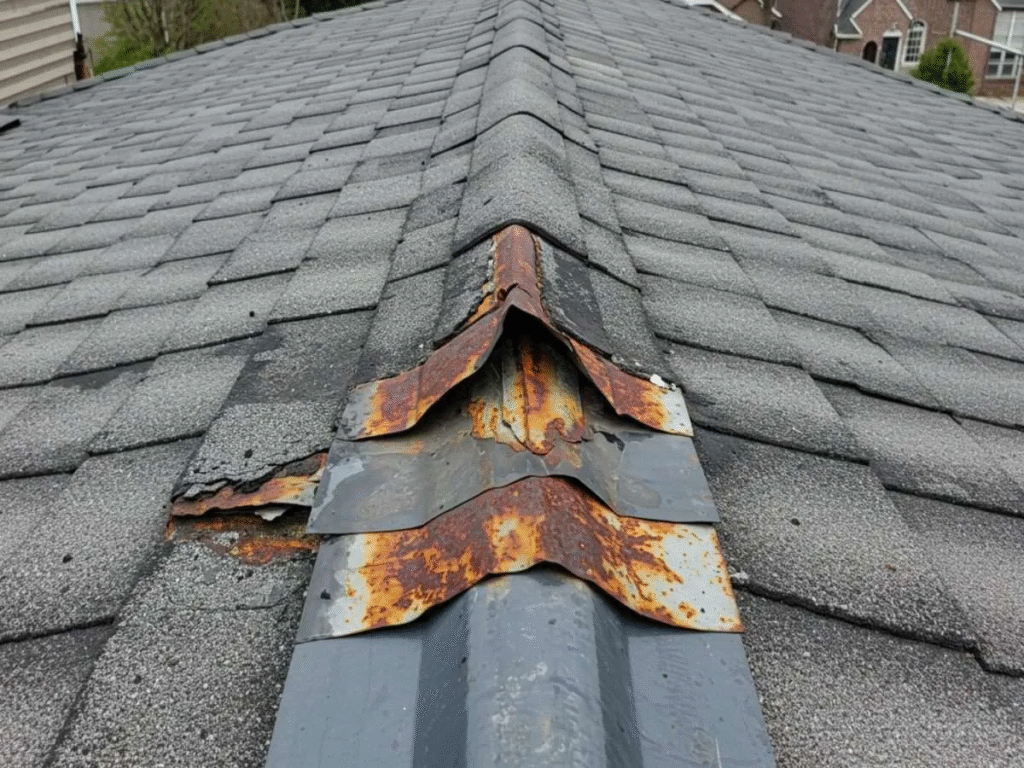
- Rusted, bent, or missing flashing. Flashing around chimneys, walls, and skylights is a first line of defense. If it’s rusted, bent, or pulling away, water can get in.
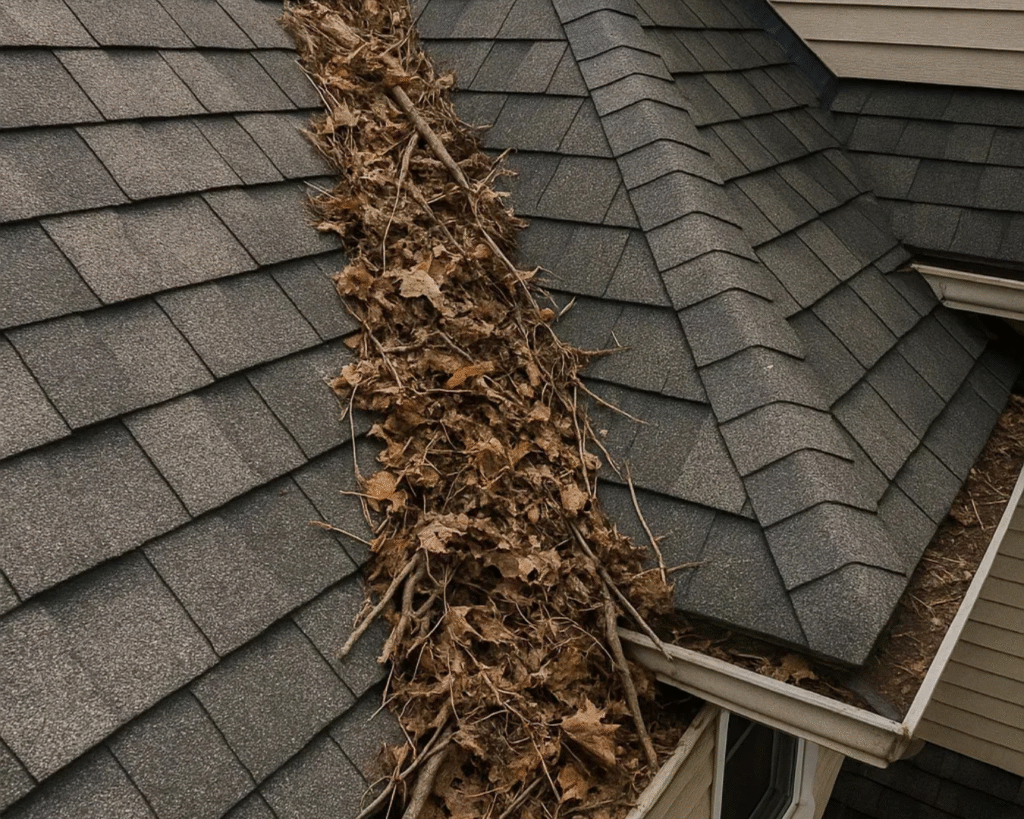
- Debris-packed or stained valleys. Valleys handle the most water. If they’re clogged with moss, needles, or leaves, water backs up. In tree-heavy areas like Edmonds or parts of Seattle, this is common and serious.
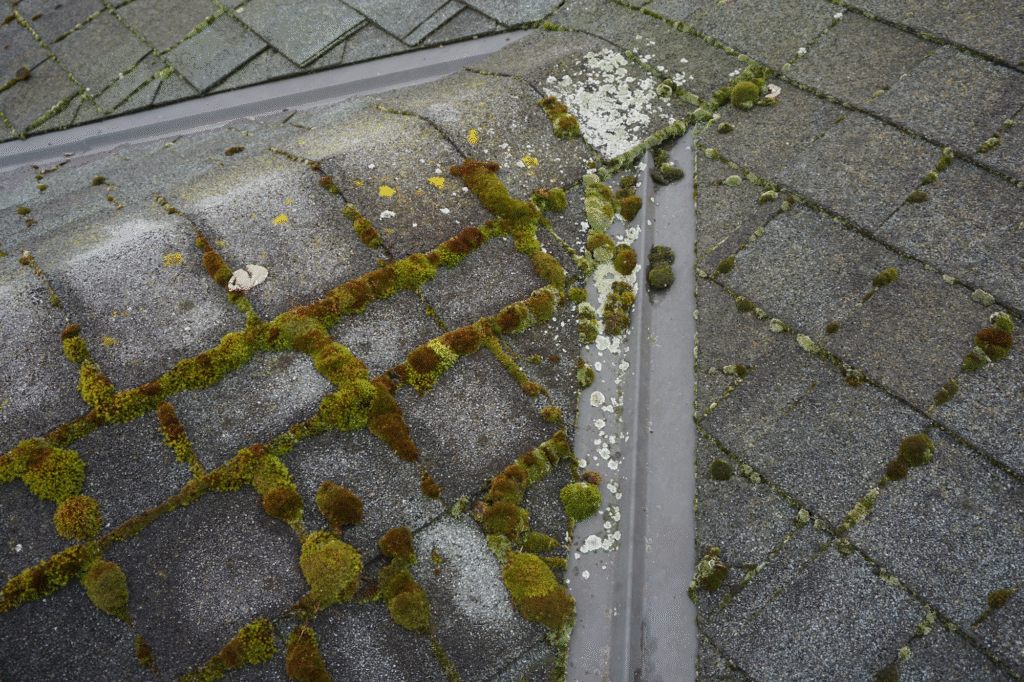
- Moss growth. Moss isn’t just cosmetic here. It holds moisture, lifts shingle edges, and accelerates breakdown. If moss is thick and widespread, the roof is staying wet too long.
Interior and Attic Signals (Even Without an Active Leak)
Sometimes the clearest signs are inside.
- Musty smell or condensation in the attic. This can mean poor ventilation, but it can also mean moisture is getting in at transitions or valleys.
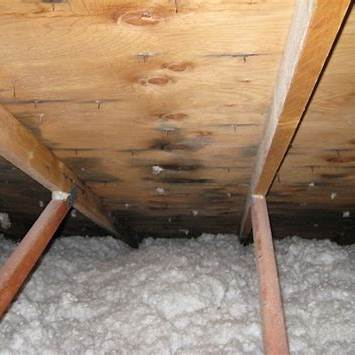
- Staining or water marks on roof decking. Look at the underside of the sheathing. Dark stains, water rings, or discoloration mean water has been getting in—even if it hasn’t dripped to the ceiling yet.
- Rusted nail tips poking through. Nails rust when exposed to moisture. If you see rust on nail tips coming through the decking, moisture has been present.
- Wet or compressed insulation. Wet insulation doesn’t insulate. If it’s damp, matted, or compressed, you’ve had moisture intrusion.
- Mold-like spotting on framing. This doesn’t always mean the roof—bath fan ducts and ventilation issues can cause similar problems. Don’t self-diagnose. A real inspection will tell you what you’re dealing with.
What Fails First in the Pacific Northwest
Roofs don’t fail evenly. Certain areas take the brunt of wind, water, and movement. Here’s where problems show up first:
- Valleys. Valleys channel the most water and collect debris. If underlayment or flashing is weak, this is where it fails.
- Step flashing and wall transitions. Wind-driven rain gets forced into the roof-to-wall joint. If flashing is missing or installed wrong, water can run behind siding.
- Chimney and skylight flashings. Penetrations move independently from the roof. Sealants crack and flashing bends. Water gets in.
- Pipe boots and penetrations. Rubber boots crack from UV exposure. Metal boots rust. When they fail, water goes straight to decking.
- Drip edge and eaves. Wind lifts edges. Cold snaps can create ice dams. Missing or poorly installed drip edge lets water wrap under the shingles.
- Ridge vents and ventilation components. Moisture accumulates if the system isn’t balanced. This accelerates deck rot from the inside.
- Underlayment at transitions. Underlayment fails first at points where water concentrates—valleys, eaves, and penetrations.
Why Waiting for a Leak Costs More
Here’s what happens when you wait for an interior leak to show up:
- Deck damage. Water sitting on sheathing causes rot and delamination. Now you’re replacing plywood, not just roofing.
- Insulation damage. Wet insulation is useless and often needs to be removed and replaced.
- Interior repairs. Drywall and paint repairs add cost and stress.
- Larger tear-off scope. Damage spreads from the weak point, increasing labor and materials.
- Emergency scheduling. Active leaks reduce flexibility. Emergency work typically costs more.
- Harder diagnosis. Multiple failure points compound and increase surprises during tear-off.
Not sure if you’re seeing “normal aging” or real failure signals? An inspection can tell you whether you’re looking at a repair, a replacement, or just maintenance. You should leave with photos and clear next steps.
Repair vs Replace: When Does a Patch Make Sense?
Not every roof with warning signs needs to be replaced. Here’s a simple way to think through it:
A repair can make sense if:
- Damage is isolated to one area (storm damage, fallen branch)
- The roof is under 10 years old and otherwise sound
- A flashing or boot replacement solves a specific issue
- You’re planning a replacement soon and need to buy time
Replacement usually makes sense if:
- You’re seeing multiple weak points (valleys, flashing, shingles all showing wear)
- The roof is 20+ years old
- You’ve had multiple repairs in the last few years
- Signals are combined: worn shingles plus failing flashing plus ventilation concerns
- The roof has become a recurring patch cycle
If You’re Replacing Anyway: Should You Consider Metal?
Asphalt is a solid, proven option. It’s budget-friendly and performs well when installed correctly.
Standing seam metal is a different category. It’s a system, not just a material swap. In the PNW, that matters.
- Wind resistance. Panels lock together with no exposed fasteners to back out.
- Moisture shedding. Metal doesn’t absorb water and sheds debris more easily.
- Longevity. A properly installed standing seam roof can last decades.
- Low maintenance. No granule loss, fewer storm-related issues, less recurring moss treatment.
If you’re staying long-term and want to reduce roof worries, metal can make sense. If you need a strong roof at a lower upfront cost, asphalt is often the right fit.
Read more: standing seam metal roofing.
How to Compare Bids and Avoid Getting Overcharged
If you’re getting estimates, compare scope and details, not just the bottom-line number.
What a serious estimate should include:
- Decking inspection plan. What happens if bad plywood is found during tear-off.
- Underlayment type and placement. Where ice and water shield is used (valleys, eaves, penetrations, transitions).
- Flashing scope. Chimneys, walls, skylights, pipe boots, valleys. Material and method.
- Ventilation plan. What’s changing, what’s staying, and why.
- Drip edge and edge metal details. Often skipped by low bids.
- Valley design. Especially important in tree-heavy areas like Seattle and Edmonds.
- Cleanup and protection. Landscaping protection, magnet sweep, dumpster placement.
- Documentation. Before and after photos of weak points and findings.
- Warranty clarity. Workmanship terms vs manufacturer coverage. Avoid vague promises.
Red flags in a bid:
- “Price per square” only, with no breakdown
- Vague flashing language like “we’ll handle it”
- No mention of ventilation assessment
- No discussion of valleys, penetrations, or transitions
- Same-day pressure tactics
If you want to understand why costs vary, read: standing seam pricing.
When to Call a Pro (Even Without a Leak)
- Your roof is 15+ years old and showing any exterior warning signs
- You had a recent windstorm and see lifted, creased, or missing shingles
- Moss is thick and widespread, especially on shaded slopes
- You’re planning to sell and want to avoid inspection surprises
- You’ve had multiple repairs in the last 2–3 years
What a real inspection should document:
- Photos of weak points (valleys, flashing, edges, penetrations)
- Decking condition (from attic and/or surface checks)
- Ventilation evaluation (intake vs exhaust balance)
- Clear next steps: repair options, replacement options, and scope recommendations
For more on why roofs fail here, read: why roofs fail in the Pacific Northwest.
FAQ
Can a roof need replacing even if it’s not leaking inside?
Yes. In the PNW, roofs often fail at valleys, flashing, and transitions long before you see an interior leak. By the time water shows indoors, deck and insulation damage may already be underway.
What are the early warning signs of roof failure in the Pacific Northwest?
Curling shingles, granule loss, exposed nails, failing flashing, debris-packed valleys, widespread moss, soft spots, and attic staining or musty odor are all common signals.
Is moss just cosmetic, or is it a real problem?
In the PNW, moss is a real problem. It holds moisture, lifts shingle edges, and accelerates breakdown. Thick, widespread moss usually means the roof stays wet too long.
How do I know if I need a repair or a full replacement?
Repairs make sense when damage is isolated and the roof is relatively young. Replacement makes sense when you have multiple weak points, recurring repairs, or a roof near the end of its service life.
If I’m replacing my roof, should I choose asphalt or metal?
Asphalt is a solid, budget-friendly option. Standing seam metal costs more upfront but can deliver decades of performance with less maintenance. The right choice depends on budget, goals, and how long you plan to stay in the home.
How do I avoid getting overcharged if I replace before the roof fails?
Compare detailed scopes: underlayment, flashing, ventilation, valley design, decking plan, cleanup, and documentation. Avoid bids that are vague or only quote “per square.”
What should a roof inspection include if I’m considering replacement?
You should get photos of weak points, an assessment of decking and ventilation, and clear options for repair vs replacement with a scope you can understand.
Next step: If you’re seeing any of these signs, we can inspect, measure, and document the weak points so you’re not guessing.
Call or text – click to call >(360) 840-5554 or request a free estimate. We measure everything and provide a clear, transparent scope.